
Goddess: Asteria
Mythology: Greek Mythology
Represents: Night sky, dreams, divination, and prophecies
Dive into the captivating story of Asteria, the enigmatic Titaness of Greek mythology. Her narrative, rich with drama, symbolism, and intrigue, offers a fascinating exploration of her role in Greek mythology, her family lineage, and enthralling legends.
Who is Asteria?
Asteria stands as a prominent figure in Greek mythology, recognized as a Titaness and a goddess linked to the night sky. Born to Titans Coeus and Phoebe, she’s also the mother of Hecate, an equally captivating figure. Her divine lineage forms a deep connection to the celestial realms, embodying the essence of the night and the stars. In ancient Greek beliefs, she was revered for her involvement with dreams, divination, and prophecies, marking her as a significant figure within the Greek pantheon.
Asteria in Greek Mythology
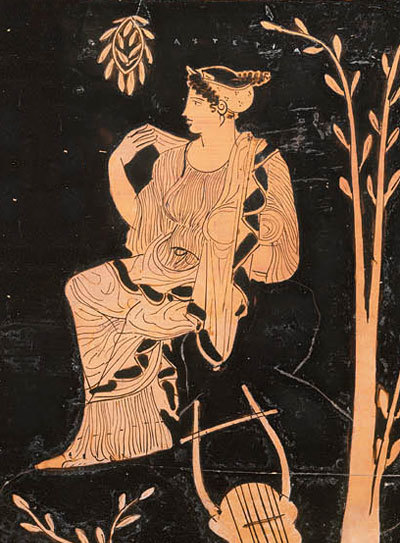 Kadmos Painter – Asteria in Greek Eros vase; Public Domain (Wikimedia Commons)
Asteria’s presence in Greek mythology underlines the complex web of ancient beliefs and legends that shaped Ancient Greece’s mythological realm. As a divine entity, she adds to the mystery of Greek myths. Representing the transition from day to nightfall, Asteria, an immortal deity, is a significant character in ancient stories, epitomizing the essence of celestial realms and eternal existence.
What is Asteria’s Role in Greek Mythology?
Her role in Greek mythology intersects with other gods and goddesses’ narratives, further enhancing her status among the celestial pantheon. As the daughter of Titans Coeus and Phoebe, her thematic connections to the sky highlight her ability to bridge the earthly and divine realms. Ancient poets lauded her beauty and grace, enhancing her celestial stature.
Asteria’s Family Tree
Asteria’s family tree in Greek mythology is interwoven with the lineage of Titans, Olympian gods, and a rich tapestry of ancient beliefs. As a Titaness, she is a direct descendant of primordial beings, embodying the legacy of divine ancestry within the Greek pantheon.
Who are Asteria’s Parents?
In Greek mythology, Asteria’s parents are the Titans Coeus and Phoebe, who are significant figures from ancient Greece renowned for their roles in the Titanomachy. The lineage of Coeus and Phoebe reflects the rich tapestry of legends and tales that characterize the ancient Greek pantheon.
Coeus and Phoebe belonged to the original Titans, predating the Olympian gods, and were esteemed for their powers and wisdom. Coeus was associated with intellect and rationality, while Phoebe was connected to prophecy and the moon. Their union symbolized the equilibrium between knowledge and foresight, positioning them as central figures in the Titanomachy, the legendary battle between the Titans and Olympians.
This mythical clash played a pivotal role in shaping the Greek cosmos and establishing the dominion of the Olympian deities, illustrating the enduring struggle for supremacy and authority in ancient Greek mythology.
Who are Asteria’s Siblings?
 Leto Goddess (LLH Illustration)
Asteria, the Titan goddess from Greek mythology, had one known sibling, Leto. They were both daughters of the Titans Coeus and Phoebe. Leto is well-known in mythology for being the mother of the twin deities Apollo and Artemis, with Zeus as their father1. Asteria and Leto shared a close bond, evident in the myth where Asteria transformed into an island to provide refuge to her pregnant sister, defying Hera’s edict that no land should harbor her.
Who are Asteria’s Children?
Asteria’s maternal role in Greek mythology shines through her children, especially Hecate, a figure linked with magic, witchcraft, and prophecy. The relationship between Asteria and Hecate tells a story of motherhood, fate, and the dynamics of divine heritage.
As Asteria’s offspring, Hecate embodies the core elements of mystery and wisdom that have been passed down through generations. The deep connection between them is intricately woven into ancient narratives, symbolizing the lasting impact of maternal influence.
The narrative of motherhood and prophecy intertwines in their tale, underscoring the cyclical aspect of destiny and the delicate balance between guidance and independence within the realm of mythology.
In the domain of Greek mythology, the maternal bond shared by Asteria and Hecate serves as a poignant reflection of the intricacies of fate and the enduring resilience inherent in familial relationships.
Stories and Legends about Asteria
The tales and myths revolving around Asteria in Greek mythology reflect themes of pursuit, transformation, and celestial symbolism, portraying her as a nocturnal deity pursued by formidable entities. Her mysterious aura as a concealed celestial entity threads through ancient writings, embodying the essence of an enigmatic oracle.
The Pursuit of Asteria by Zeus
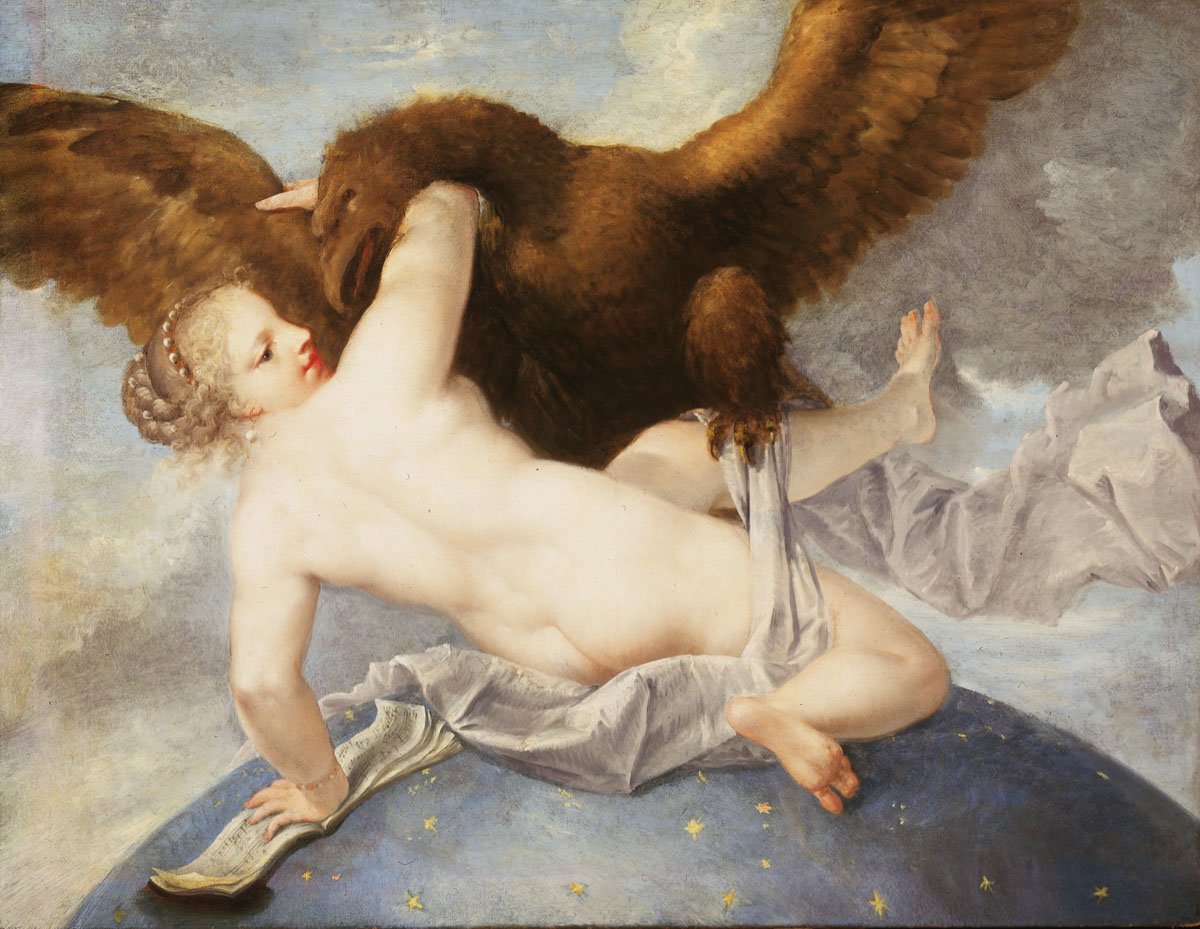 Marco Liberi – Jupiter and Asteria, Public Domain (Wikimedia Commons)
The tales and myths revolving around Asteria reflect themes of pursuit, transformation, and celestial symbolism. In a captivating story, Zeus chases Asteria across the night sky, leading to her transformation and escape into a sanctuary of stars. This allegorical pursuit encapsulates fear, transformation, and the mystical allure of celestial symbolism found in ancient Greek tales.
Asteria’s Transformation into a Quail
Asteria’s transformation into a quail marks a significant moment characterized by enigmatic concealment and hidden identity. Throughout her metamorphosis, Asteria embodied the psychological intricacies of fear and the relinquishment of control, showcasing a deep acceptance of the unknown.
Symbols and Depictions of Asteria

The symbols and representations of Asteria in art and literature carry deep symbolic meanings, with the quail emerging as a key motif symbolizing her transformative nature. Asteria’s association with the stars adds a celestial charm and mystical significance to her depictions.
The Quail as a Symbol of Asteria
The symbols and representations of Asteria in art and literature carry deep symbolic meanings, with the quail emerging as a key motif symbolizing her transformative nature. The quail’s presence contributes to a symbolic story of celestial mystery under the vast starry night sky, capturing Asteria’s enigmatic character.
Depictions of Asteria in Art and Literature
The artistic and literary representations of Asteria provide insight into her symbolic portrayal. In artistic portrayals, she is depicted as a luminous figure, representing the domains of the nocturnal sky and prophetic abilities. In literary works, she is often illustrated as a celestial entity who transforms into a star to evade Zeus’s advances, aligning with themes of protection, divine nature, and mystical alteration.
Asteria’s Influence on Modern Culture
Asteria’s enduring influence on modern culture is evident in symbolic representations and thematic connections to Greek heritage and mythologies. Her symbolic resonance is observable in frequent references to her stories in literature, art, and popular culture, demonstrating the timeless power of her symbolism.
The Importance of Asteria in Greek Mythology
The role of Asteria in Greek mythology transcends storytelling, representing themes of transformation and rejuvenation. The tale of Asteria provides insight into the cyclical nature of life, where darkness transitions into light, and challenges lead to personal growth.
Conclusion
In conclusion, Asteria, the Titaness of Greek mythology, embodies the essence of the night sky and celestial realms. Her role as a goddess of dreams, divination, and prophecies adds depth to the Greek pantheon, showcasing her significance in ancient beliefs. Asteria’s legends, including her transformation into a quail and her pursuit by Zeus, highlight themes of transformation, fear, and the mystical allure of the celestial world. Overall, Asteria’s story reflects the cyclical nature of life and the importance of challenges in personal growth.
Key Takeaways
- Asteria is a Titaness associated with the night sky, dreams, and prophecies in Greek mythology.
- Her myths, like her transformation into a quail and pursuit by Zeus, emphasize themes of transformation and the mystical nature of the celestial realms.
- Asteria’s story symbolizes the cyclical nature of life, where darkness transitions into light, and challenges lead to personal growth.
Frequently Asked Questions
Who is Asteria in Greek Mythology?
Asteria is a Titaness in Greek mythology known as the goddess of nocturnal oracles and falling stars. She is also associated with divination and prophecies.
Why is Asteria known as the Fleeing Titaness?
Asteria is known as the Fleeing Titaness because she is said to have fled from Zeus’ advances and transformed herself into a quail to escape him.
What is the story of Asteria’s daughter, Hecate?
Asteria’s daughter, Hecate, was born from her union with the Titan Perses. She is often portrayed as a goddess of magic, witchcraft, and the underworld.
What other myths or stories feature Asteria?
Asteria is also mentioned in the story of the Titanomachy, the battle between the Titans and the Olympian gods. She is said to have sided with her fellow Titans in the war.
How does Asteria’s role differ from other Titanesses in Greek mythology?
Asteria is unique among the other Titanesses because she is not associated with fertility or motherhood. Instead, she is associated with divination and the night.
Is there a temple or shrine dedicated to Asteria?
There is currently no known temple or shrine dedicated to Asteria. However, the island of Delos was believed to be her sacred birthplace and was often associated with her worship.

I am Athena, the co-founder of Legendary Ladies Hub, a platform where I share my lifelong passion for goddesses and female figures. As a history graduate with a fascination for mythology, I bring ancient tales to life through vivid storytelling. I invite fellow explorers to join me in celebrating the power and beauty of divine femininity. The images of female figures on my platform are closely referenced to historical sources and are modernised interpretations. I hope you like them!

